
As telehealth expands into more clinical domains, the limits of standard video-conferencing tools are becoming clear. While Zoom, Teams, and similar platforms have carried the weight of the remote-care revolution, they were never designed for diagnostic listening. Their noise suppression and speech-optimization features, while helpful for conversation, can distort or erase the faint acoustic cues clinicians rely on to detect heart murmurs, lung crackles, or bowel sounds. For remote auscultation to reach its full potential, clinicians need a way to stream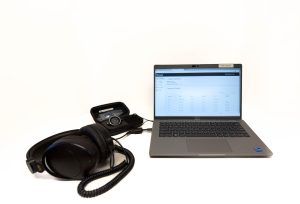 stethoscope audio that doesn’t travel through the same, human voice-optimized channel as the rest of the visit. That’s where “out-of-band” audio solutions come in.
Why Out-of-Band Matters
In a standard telehealth call, all audio is transmitted together: the clinician’s voice, ambient sounds, and any input from connected devices. Built-in video platform aggressive filter to remove what they interpret as background noise. This often includes the low-frequency signals that make up diagnostic heart and lung sounds. Even when a clinician connects a digital stethoscope directly to the conferencing computer, the compression, gain control, and echo cancellation can blur or flatten the sound. While noise suppression and AI audio enhancement can sometimes be disabled within video platforms, stethoscope audio often remains limited by transmission and frequency constraints. An out-of-band configuration overcomes these issues by transmitting stethoscope audio through a dedicated channel, independent of the video platform. This approach preserves the full acoustic quality of heart and lung sounds, enabling real-time listening, recording, and even AI-assisted analysis, without disrupting the clinician/patient video encounter. Because auscultation audio is handled separately, its levels can be adjusted independently from the video feed, providing greater control during the examination while maintaining uninterrupted voice communication.
Evaluating Telesensi
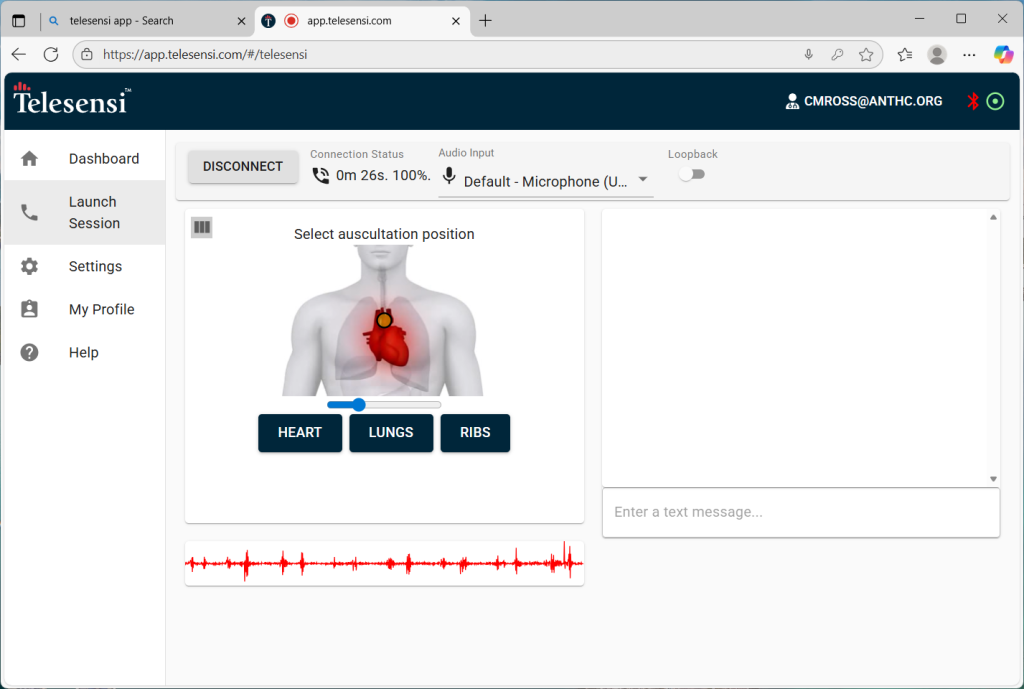
TTAC has noted a limited number of platforms on the market that provide out-of-band audio for stethoscopy. One platform, Telesensi, is a web-based auscultation streaming system designed for high-fidelity, real-time remote listening. The system operates entirely in the browser and requires no proprietary desktop software, which simplifies deployment. Clinicians initiate a session by creating a host connection (essentially a Connect–Host–Session ID– Pass-PIN sequence) that allows remote participants to join securely via a session pin. Direct address books can also be customized for organizations to make it easier to connect with another clinician via a click.
Whether a provider is in your group or not, if they have a valid Telesensi login, they can connect via the Pass-Pin to listen to the streaming audio. The platform architecture relies on WebRTC, enabling low-latency, high-quality streaming directly between clinician and patient devices. Because the stethoscope audio travels outside the normal conferencing pathway, it avoids interference from noise cancellation and other speech-focused processing from the visit video platform.
In testing with a range of digital stethoscopes — including the Thinklabs One, Riester Ri-Sonic USB, and JedMed Omnisteth — the Telesensi platform maintained consistent sound quality. It also supports legacy models such as the Littmann 3200 (which does require an additional driver, buts supports in app filter controls) and Eko models that support headphone jacks, as well as analog stethoscopes (like the Riester Ri-Sonic PCP-1) converted through a simple Line-Out (headphone jack) to-USB interface. Clinicians can listen in two ways: through an integrated loopback function that lets them monitor live sounds in the browser. Or for the far-end provider, they can have a browser open and connected to the live session. This browser-based design allows Telesensi to run in parallel with an existing telehealth platform, isolating auscultation audio without requiring a change in base video platform and components. The Telesensi team can also support clients with integration if needed. During the live session, the users can navigate stethoscope placement using Telesensi’s 3D interactive patient model. There is also a built-in type-chat functionality to enable “silent” communications during an auscultation session. Telesensi also offers a recording function to allow the listening clinician to record an audio file which can be saved for future reference and/or second-opinion sharing.
Adding Intelligence to Listening
Telesensi’s roadmap extends beyond streaming. Through collaborations with Mercer University and Tufts, the company is exploring headless murmur detection — automated, server-side algorithms capable of screening cardiac sounds for abnormal patterns without the clinician needing to trigger the analysis manually. The platform’s AI “Cardiac Module” already includes FDA-cleared murmur detection (SensiCardiac) with reported accuracy above 95 percent, and future releases aim to make this feature even more seamless. Going live before the end of 2025, Telesensi will also offer audio filters (bell, diaphragm, wide and custom) to their users, which can be controlled by the presenter or the remote provider.
Deployment, Pricing, and Support
Telesensi is offered via direct subscription, with flexible pricing tiers ranging from roughly $25 to $100 per user per month, depending on scale and partnership terms. Pricing may vary based on volume licenses and required integrations (SSO integrations, etc.). The service reports 99.9 percent uptime. Training for new users is part of the onboarding process to ensure that clinicians and support staff understand setup, device pairing, and live-session workflows. Telesensi does offer demo sessions which can be scheduled directly through the web portal. The process is entirely browser-based; there is no need for software installation or local driver configuration. Platform integration is also available to allowing the Telesensi app to be embedded Telesensi into a telehealth platform. Telesensi is currently active in the USA, Canada and Africa
Early Impressions
 In early field use, the system proved capable of supporting real-time auscultation without interfering with concurrent video or microphone activity. The browser-based nature of the Telesensi application makes it adaptable: providers can run their preferred telehealth platform while using the stethoscope stream as a secondary, purpose-built diagnostic channel. The fidelity achieved with the Thinklabs and Ri-sonic models was notably clear — a marked improvement over attempts to push the same signals through standard conferencing audio.
The Broader Trend
Telesensi represents a growing class of telehealth tools that treat diagnostic sound as its own data domain. Just as connected otoscopes and dermatoscopes have brought imaging quality up to in-person standards, these out-of-band stethoscope systems aim to reinforce the integrity of clinical audio. Regardless of organizational size, the appeal of this platform lies in its simplicity: open a browser, connect the stethoscope, share a session code, and begin. There’s no need to disable noise suppression settings or troubleshoot audio routing. What emerges is a workflow that feels more natural by delivering diagnostic precision closer to a bedside exam.
Looking Ahead
Telesensi’s combination of web-native architecture, multi-device compatibility, and AI-driven murmur detection points toward an improved tele-examination experience. An experience where sound is treated as a first-line clinical indicator, like it has long been in in-person examinations. As telehealth platforms continue to leverage existing video conference software, these out-of-band systems will likely become necessary tools in organizations’ digital care toolboxes. For providers eager to “hear what’s missing” in their current virtual workflow, platforms like Telesensi offer an opportunity to hear what simplified connected auscultation can sound like.
From time to time TAC will choose a piece of technology to show or demonstrate in the “Innovation Watch” section of our website. No endorsement of any products or services is expressed or implied by any information, hyperlink text, product, service, material or content referred to or included on, or linked from or to the TTAC web site.