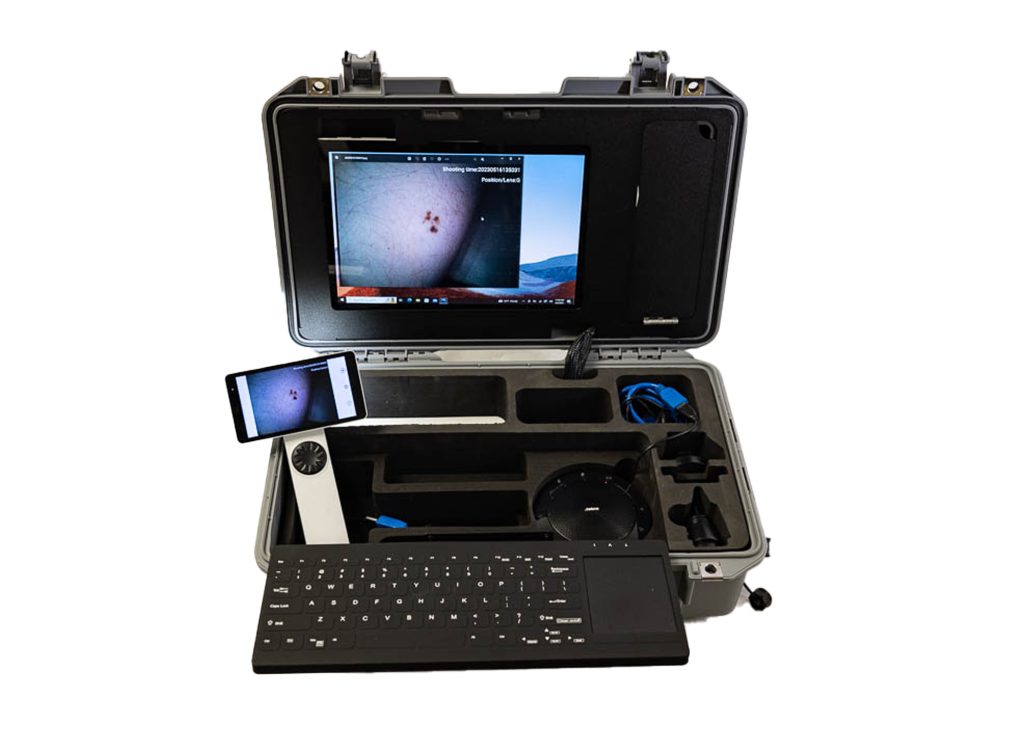
A mobile telehealth case is a rugged, portable kit designed to bring the capabilities of a clinic directly to patients wherever they are. These cases house the essential technology for virtual care, including a computer, video conferencing peripherals, and diagnostic devices. Packaged inside a durable enclosure, these units can be transported into homes, community centers, disaster zones, or mobile health vans. Their main purpose is to extend healthcare access beyond traditional facilities, ensuring patients in remote, underserved, or hard-to reach settings can still receive high-quality, real-time care.
How It Works
The case itself typically contains a small computer or tablet that powers the telehealth encounter. A high-definition webcam and speakerphone allow for real-time video communication between patients and remote providers. Some units include rechargeable batteries that allow six to twelve hours without being tethered to wall power. Connected diagnostic devices feed clinical data directly into the system, so that a remote clinician can observe an exam camera feed, listen through a digital stethoscope, or review vital signs as they are captured.
Connectivity is a critical feature. Depending on the configuration, cases can connect to the internet via Wi-Fi, a wired Ethernet cable, or a cellular modem that supports LTE or 5G. Once online, the case links securely to a telehealth platform, allowing the provider to guide the local operator, receive live diagnostic data, and document the encounter seamlessly.
Key Features
A defining characteristic of these systems is their rugged design. Many are built to withstand rough handling and exposure to dust, water, or sudden impacts, making them suitable for unpredictable environments such as field hospitals or mobile health clinics. Portability is another major advantage with many cases featuring handles for one-handed carry, or luggage-style wheels for easy transport. Secure compartments for diagnostic equipment help ensure safe transit and quick setup on site.
Another important feature is modularity. Organizations can configure a case with just a few core devices—such as an exam camera and a digital stethoscope—or expand it to include advanced tools like multi-lead ECGs, or portable ultrasound wands. By relying on standard computing platforms, the system can accommodate new peripherals through simple plug-and-play connections, extending its usefulness over time.
At the software level, HIPAA-compliant telehealth platforms ensure that video consultations and diagnostic data are encrypted and stored securely. Beyond security, these platforms act as the bridge tying together communication, clinical data, and documentation, often integrating directly with electronic medical records.
Use Cases
Mobile telehealth cases are especially useful when patients cannot easily reach a clinic. In rural areas, providers can send community health workers equipped with a case to patients’ homes, eliminating the need for long travel to hospitals or clinics. Public health organizations use them in mobile vans or pop-up clinics to offer screenings and consultations directly in neighborhoods where access to care is limited.
During emergencies, these kits can be deployed to support triage or connect injured patients to specialists who may be hundreds of miles away. Schools and workplaces are also finding value in this model: a case stationed on site allows prompt evaluations for students or employees, minimizing time lost to off-site appointments while maintaining professional oversight from a remote clinician.
Innovative Features
The primary benefit of a mobile telehealth case is expanded access. By bringing diagnostic-grade equipment into the field, healthcare organizations can reach patients who might otherwise forgo care due to distance, transportation challenges, or emergency circumstances. The rugged design ensures reliability under harsh conditions, while real-time transmission of data allows remote providers to make timely and informed clinical decisions.
These cases are also highly adaptable. Their portability allows them to be carried into homes, mounted in a vehicle, set up in shelters, or even thrown into the baggage area of a light aircraft. Their modular design allows organizations to begin with a basic setup and expand over time with new capabilities as needs dictate. This flexibility makes them an attractive option for programs that anticipate rapid deployment in changing environments.
Considerations for Selection
|
Factor |
Why It Matters |
|---|---|
|
Durability Rating |
Ensures equipment survives field use, travel, and storage requirements |
|
Compartment Design |
Affects transport safety, peripheral loadout, and ease of future expandsion |
|
Battery Capacity |
Must support all devices and computing for the required duration of use |
|
Device Compatibility |
Confirms peripherals integrate seamlessly with the host and telehealth platform |
|
Connectivity Options |
Redundancy via Wi-Fi, Ethernet, and LTE/5G improves reliability |
|
Software Integration |
Supports video, device data, and documentation within clinical workflows |
|
Mobile Device Management |
Built-in computer or tablet may require IT management beyond standard configurations |
|
Training & Support |
Usability depends on adequate staff and clinician training |
For more detailed tips and example processes of hardware selection, see our Technology Assessment 101 toolkit.
Potential Limitations
The portability and flexibility of these cases may introduce some tradeoffs versus more traditional telehealth endpoints. Battery capacity may be limiting when supporting multiple peripherals or extended use. Compatibility issues between peripherals and host computers can create workflow disruptions, especially if required software drivers are missing or outdated. Additionally the ruggedization of these devices can restrict access to ports, buttons, or other device components. Connectivity can also be a concern: in areas with limited cellular coverage or unreliable internet, performance may be degraded, resulting in poor audio or video quality.
Another key consideration is training. Staff unfamiliar with medical peripherals need time and support to build confidence in setup and use, making training an essential investment for successful deployment.
Why It Matters
Mobile telehealth cases are a practical solution to one of healthcare’s biggest challenges: providing consistent, high-quality care outside of traditional facilities. By combining rugged hardware, clinical-grade diagnostic devices, and secure telehealth software, these systems work together to meet that need. Whether deployed in homes, schools, community clinics, or emergency response efforts, mobile telehealth cases can expand access, reduce delays, and enable effective healthcare delivery in the field.
Known examples:
|
Company |
Product |
Link |
|---|---|---|
|
Global Med |
Transportable Exam Station |
|
|
Howard Medical |
Rugged Telemedicine Kit-22 / Kit-19 |
Summary
A mobile telehealth case is a field-ready kit that integrates computing, communications, and diagnostic devices into a single rugged package. Designed for portability and durability, these systems support secure telehealth encounters in settings where patients cannot easily access traditional clinics. They expand access, provide real-time diagnostic data, and can grow with organizational needs. Despite challenges such as power, compatibility, and connectivity, mobile telehealth cases have emerged as an essential tool for extending the reach of modern healthcare.
From time to time TAC will choose a piece of technology to show or demonstrate in the “Innovation Watch” section of our website. No endorsement of any products or services is expressed or implied by any information, hyperlink text, product, service, material or content referred to or included on, or linked from or to the TTAC web site.