AI-Enabled Auscultation and Clinical Documentation in a Single Device
Platform Overview
The electronic stethoscope has been a fixture of telehealth programs for years, valued primarily for its ability to transmit auscultatory data across distance. Keikku represents a departure from that single-purpose model. Rather than competing on sound amplification alone, Keikku integrates clinical-grade auscultation, ambient documentation, and AI-assisted analysis into a wireless platform: positioning itself as both a peripheral device and a clinical workflow tool.
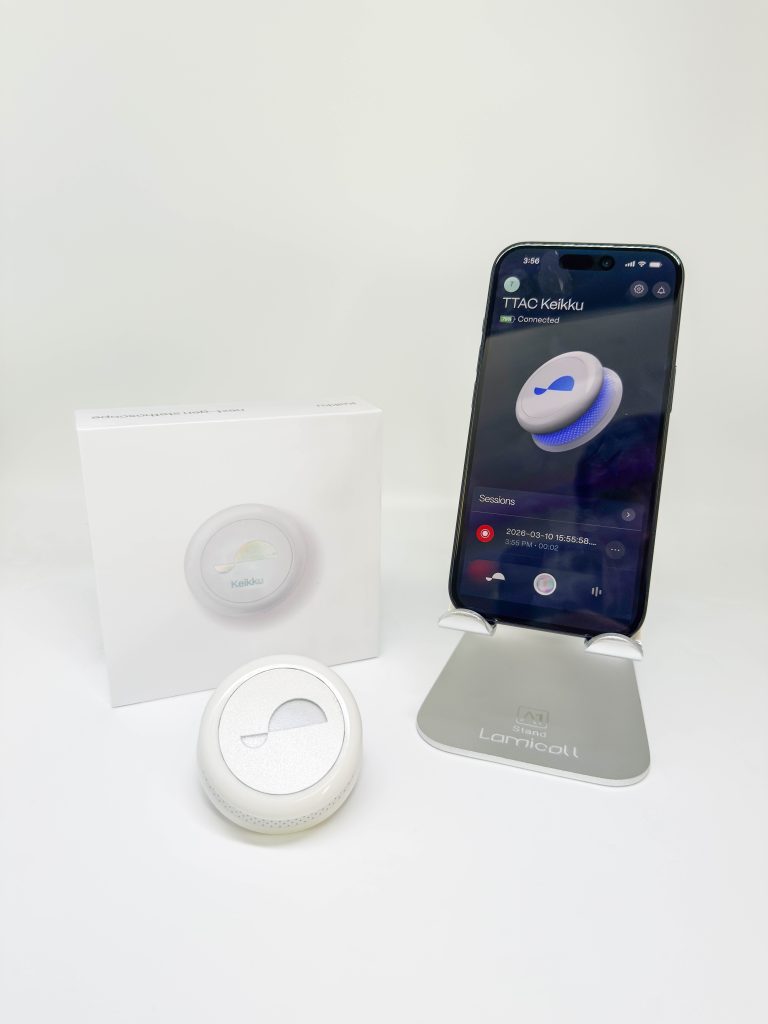
The device is designed to function as both a digital stethoscope and an AI medical scribe, capturing heart and lung sounds in one mode and transcribing and structuring the clinical encounter in another. This combination of diagnostic and administrative capability reflects a trend in health technology: the consolidation of disconnected tools into unified platforms that reduce clinician burden while improving the completeness and consistency of clinical data.
Keikku is FDA-cleared and designed to support in-person care, telehealth visits, and remote monitoring environments. It supports real-time audio streaming, on-device recording, and soon AI-assisted interpretation of auscultatory findings.
Core Capabilities
Digital Auscultation
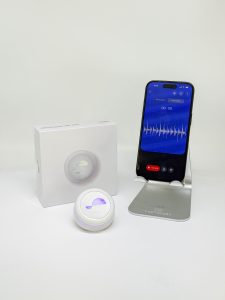
At its core, Keikku performs the primary function of a clinical-grade digital stethoscope: high-fidelity capture of heart and lung sounds, with amplification and signal filtering to improve clarity in real-world environments. Audio is delivered wirelessly via Bluetooth-enabled headphones, and recordings can be tagged, stored, and shared (through the Keikku mobile app) across care teams, while supporting both synchronous and asynchronous review. Noise reduction and signal enhancement features are intended to address the interference common to stethoscope exams in non-ideal clinical settings.
AI Medical Scribe
Where Keikku most clearly differentiates itself from traditional digital stethoscopes is in its ambient documentation capability. The device captures clinician-patient conversations, automatically generating transcriptions and structured clinical notes: including SOAP-format documentation and coding support for ICD-10, CPT, and HCC. Outputs are editable before EHR integration, allowing clinicians to review and adjust them before submission.
Clinical AI — Auscultation Analysis
Keikku will soon officially incorporate AI-assisted detection of cardiac and pulmonary abnormalities, including findings such as murmurs and crackles. This advanced AI-assisted detection is powered by
Recorded sounds are visualized and analyzed within the platform, and the manufacturer indicates that diagnostic capabilities will expand through software updates over time. This positions Keikku as an evolving platform rather than a fixed-feature device; however implementation of the eMurmur platform is still in development.
Interoperability and Workflow Integration
Keikku is designed to potentially integrate with major EHR platforms, including Epic, Cerner, and eClinicalWorks, with API-enabled data exchange for organizations seeking custom configurations. Data is stored in the Keikku cloud with structured outputs intended to support data use in other systems and applications.
Technology and Design
Keikku departs from the traditional stethoscope form factor, adopting a compact, fully wireless design optimized for mobility and extended clinical use. The device uses high-definition microphones to capture both auscultatory and ambient audio, with gesture-based controls and LED feedback for in-use indication. Battery life is designed to support extended clinical shifts, and data handling is HIPAA-compliant with encrypted transmission.
The design intent is to function as a multimodal clinical instrument: one device managing listening, documentation, and analysis. Whether that consolidation holds up under the varied conditions of real clinical environments is a central question for user evaluation.
Clinical Use Cases
Primary Care and Outpatient Settings
In primary care, Keikku’s most immediate value proposition is the pairing of routine auscultation with automatic documentation. Clinicians conducting standard exams would generate both audio recordings and structured clinical notes from a single device interaction, with the potential to reduce time spent on manual charting and after-visit documentation.
Telehealth and Remote Care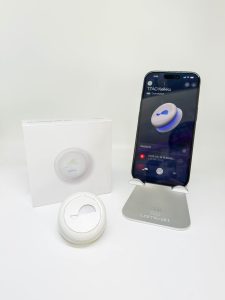
For telehealth applications, Keikku supports real-time streaming of auscultation data to remote clinicians, as well as asynchronous review of recorded sounds. This enables remote auscultation workflows that previously required separate device setups and audio transmission solutions. Integration of stethoscope audio into virtual visits may strengthen the clinical completeness of telehealth encounters in ways that audio-only or standard video visits may not.
Specialty Care — Cardiology and Pulmonology
In specialty contexts, the AI-assisted detection features may offer the most clinical relevance. The ability to track heart and lung sounds over time, flag findings, and facilitate collaboration between generalists and specialists could support more consistent referral and co-management workflows. As with any AI-assisted diagnostic tool, the reliability of those outputs in practice will shape how much clinicians come to depend on them.
Remote Monitoring and Community-Based Care
Keikku’s wireless design and portable form factor make it a candidate for use outside traditional clinical settings, including rural and community-based care locations where access to clinical-grade equipment is often limited. The platform may also have potential for patient-assisted or community health worker use, though those applications would require careful consideration of training, supervision, and data governance requirements.
Workflow Impact
By combining auscultation, ambient transcription, clinical note generation, and coding support in a single device, it aims to reduce the number of tools clinicians must manage during and after an encounter.
The practical impact of the dictation depends on multiple factors: how much time it actually saves, how accurately it captures and codes clinical information, and how well it fits into existing documentation habits, etc. These impacts will depend significantly on the implementation context and real-world performance. For programs where documentation burden is a known problem, the value case may be quite clear. Translating the impact into measured outcomes will require hands-on evaluation in a clinical setting.
Implementation Considerations
As with any platform that touches both clinical documentation and EHR systems, implementation involves more than device deployment. Several factors warrant attention during planning:
Training and Adoption: The device is designed for a minimal learning curve, but changes to documentation workflow, particularly the shift to ambient AI-generated notes, may require structured onboarding and a period of clinician adjustment. Staff comfort with reviewing and editing AI-generated content will be a practical factor in whether the time savings materialize. Careful attention will also be needed to balance reliance on the scribe feature, as all notes should be fully reviewed.
EHR Integration: Integration with Epic, Cerner, and other supported platforms will depend on API configuration and organizational IT capacity. Programs should evaluate the specifics of their EHR environment and confirm integration scope before deployment.
Data Governance: Ambient audio capture raises important considerations around patient consent, data storage, and privacy policy alignment. Organizations should review their existing governance frameworks and ensure that the platform’s data handling practices meet their requirements.
Cost Structure: Keikku’s pricing includes both a device cost and subscription-based access to AI features. Programs should model the total cost of ownership across their intended use scale and compare it to the projected time savings and documentation quality improvements.
Audio Quality
Audio quality was an area where our experience was inconsistent. Keikku’s minimalist hardware design — the device has no physical buttons or controls — is clean in concept, but that simplicity introduces some usability tradeoffs. Auscultation volume, for example, is adjusted by rotating the chest piece like a dial, a gesture-based interaction that we found difficult to execute reliably. For a function as fundamental as volume control, inconsistent response is a meaningful friction point in clinical use.
Performance in Noisy and Real-World Clinical Environments
As a wireless Bluetooth stethoscope, the Keikku benefits from the absence of tubing connecting the chest piece. This can help reduce the neck strain associated with traditional stethoscopes and removes a physical tether that can complicate movement during exams. Because the clinician listens through wireless Bluetooth headphones, there is no need to remove PPE or isolation gear to use the device — a meaningful advantage in settings where donning and doffing protocols add time and complexity. The device can also be handed to support staff for use inside an isolation room, keeping the provider outside the isolation environment entirely. When decontamination is required, the compact, tubeless form factor is easier to clean and bag than conventional stethoscopes.
Accuracy and Usefulness of AI-Generated Notes
The AI scribe function was among the more impressive aspects of the platform in our evaluation. Transcriptions and structured clinical notes were accessible both through the mobile app and the web portal, and while TTAC was able to note that the scribe function was generally accurate to the source audio, we can’t verify the summary or clinical recommendation quality for this product. Programs should approach ambient dictation feature with HIPAA compliance front of mind. A Business Associate Agreement should be in place before using this service in any clinical setting, and organizations should verify the platform’s data handling practices with the vendor before deployment.
On the cost side, access to the AI scribe function is included with the base cost of device purchase. However, additional AI capabilities — including clinical support powered by eMurmur (not currently released) and generative AI reference search features that allow users to query their own transcription data — require a separate monthly subscription. All three AI functions can be bundled for $90 per month. Programs should factor this into total cost-of-ownership planning, particularly if AI-assisted documentation is a primary driver of interest in the platform.
Clinical AI Detection — Murmurs and Lung Sounds
At the time of our evaluation, eMurmur-powered AI detection of cardiac and pulmonary findings was listed as “coming soon” on Keikku’s platform. Because this integration was not yet available, TTAC was unable to assess how it functions within the app or evaluate the quality of its outputs. Programs specifically interested in this capability should confirm current integration status with the vendor before making procurement decisions.
Ease of Integration into Existing Workflows
EHR integration is available through Keikku’s connections with ScribeAI and Keragon, a healthcare-focused integration platform. However, several open questions remain for programs evaluating this pathway. Additionally, the relationship between the Keikku platform and eMurmur, particularly whether existing eMurmur users can connect their accounts or whether a new subscription through Keikku is required, was not clear from available documentation. Organizations with existing EHR integration infrastructure or vendor relationships should clarify these specifics directly with the Keikku team before assuming a straightforward connection.
User Experience: Setup, Usability, and Shift Fatigue
Initial setup is straightforward once the mobile app is installed and a user account is created. Device pairing requires a code found on the included quickstart card. One detail worth noting is that the card becomes essential if the device ever needs to be re-paired. Programs managing shared devices or multi-user deployments should establish a protocol for keeping that documentation accessible, or at a minimum, a digital copy of the pairing code matched to the on-device serial number.
Once paired, the app presents three distinct operating modes, providing a clear framework for how clinicians navigate between auscultation, documentation, and other platform functions. The overall experience is designed to be approachable, though the gesture-based physical controls, noted above in the context of volume adjustment, represent an area where the learning curve may be steeper than the minimal-interface design implies.
Telehealth and Remote Use Performance
Remote auscultation sessions are initiated through a simple web link and PIN-based access, requiring no additional software on the far end. In our test session, the remote listening experience performed well, with audio delivered reliably to the far-end user. This may provide a simple solution for organizations wanting to use remote auscultation without local software installation or configuration.
Bottom Line
Keikku is best understood as an early example of a broader category shift — from the digital stethoscope as a single-purpose exam device toward what might be described as a clinical intelligence platform that integrates diagnostics, documentation, and AI into a single tool.
If the platform performs as described in real-world clinical environments, its most significant contribution to telehealth programs may not be improved auscultation quality, but rather the reduction of documentation burden, more consistent data capture, and tighter alignment between the clinical exam and the clinical record. For programs evaluating the stethoscope category, Keikku is worth watching — and worth testing under the conditions specific to your care environment.
TTAC does not recommend or endorse specific products. No endorsement of any products or services is expressed or implied by any information, content, or links included on or referenced through the TTAC website.
From time to time TAC will choose a piece of technology to show or demonstrate in the “Innovation Watch” section of our website. No endorsement of any products or services is expressed or implied by any information, hyperlink text, product, service, material or content referred to or included on, or linked from or to the TTAC web site.