To access in-depth guidance, checklists, and evaluation tools to support reliable, secure, and human-centered video care download full toolkit
Video communication is a core component of healthcare delivery. Platform performance, security considerations, accessibility features, and real-world reliability all directly influence diagnostic quality, patient trust, and provider experience.
The Clinician’s Guide to Video Platforms is a comprehensive technical resource designed to help healthcare organizations evaluate, implement, and support video technology for telehealth. Rather than focusing on reimbursement or policy, this guide centers on the practical and technical realities of using video in clinical care and how to ensure technology supports, rather than disrupts, the patient–provider relationship.
Why This Guide Matters
Video communication remains one of the most complete form of remote interaction available in clinical care. Visual cues, facial expression, and the ability to observe movement or physical findings contribute important context for a virtual visit.
As video becomes routine, organizations must understand:
- How different video platforms behave under real-world conditions
- Which technical features are essential for clinical use
- How security, privacy, and compliance responsibilities are shared between vendors and healthcare organizations
- How small choices in setup, workflow, and support can significantly improve patient and provider experience
This guide helps teams move beyond vendor marketing claims and anecdotal experience to make informed, defensible decisions about video platforms.
Who Should Use This Toolkit
- Clinicians delivering care via video
- Telehealth and virtual care program leaders
- Health IT, digital health, and informatics teams
- Administrators responsible for platform selection or oversight
- Organizations serving rural, remote, or low-bandwidth populations
What’s Inside the Toolkit
This toolkit provides practical guidance across the full lifecycle of clinical video use, including:
Foundations of Healthcare Video
- Why video is central to telehealth delivery and clinical quality
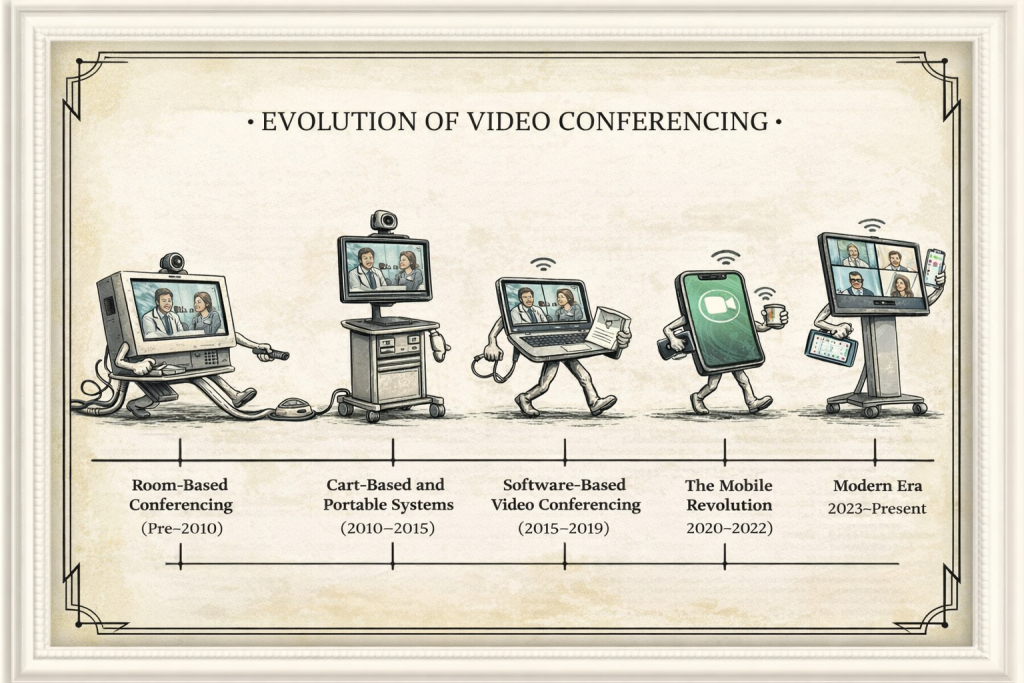
- How video platforms evolved and why legacy design assumptions still matter
Platform Capabilities & Evaluation
- Core features required for healthcare-ready video platforms
- Accessibility, integration, and usability considerations
- How to assess audio, video, and network performance under realistic conditions
- What good performance actually means for clinical care
Patient & Provider Experience
- Human-centered best practices that improve comfort, clarity, and trust
- Practical setup guidance for patients joining from home or mobile environments
- Provider presence, communication techniques, and peripheral use
Environment & Technical Checklists
- Standardized room, lighting, sound, and equipment recommendations
- Platform configuration and workflow readiness checklists
- Organizational policies, training, and support considerations
Security, Privacy & Compliance
- Business Associate Agreements (BAAs) and why they matter
- Encryption, access controls, audit logging, and recording considerations
- Key differences between consumer video tools and healthcare platforms
AI in Video Platforms
- Benefits and risks of common AI video use cases
- Guidance for intentional, transparent, and clinically appropriate AI use
- How AI is impacting modern video tools
Platform Selection & Implementation
- Introduction to TTAC’s Video Platform Scoring and Evaluation Tool
- Strategies for aligning technology choices with clinical and operational priorities
- Customizable evaluation template
Support & Troubleshooting
- Overview of common failure points in real-world video visits
- Describing the value of pre-visit technical checks
- Tiered support models and continuous improvement strategies
Key Takeaway
Successful telehealth programs are built on people, preparation, and thoughtful technology choices not expensive equipment. When video platforms are selected, configured, and supported intentionally, technology fades into the background and the clinical relationship comes forward.
👉 [Download the full toolkit] to access in-depth guidance, checklists, and evaluation tools to support reliable, secure, and human-centered video care.